

⏱ 16 min read
📑 On this page (9)
- The Malaysian airport reality: what actually happens at KLIA
- Lithium battery rules: why carry-on is mandatory
- How to pack when traveling with intimate devices: the smart setup
- Destination-specific guide for Malaysian travelers
- Traveling with intimate devices: what to do if stopped or searched
- Product care on the road
- Buying at destination vs. bringing your own
- Frequently asked questions
- The bottom line
TL;DR — Traveling With Sex Toys From Malaysia
- Yes, you can travel with intimate devices — carry-on only, not checked luggage (lithium battery rule).
- KLIA outbound is usually uneventful — customs care more about drugs, firearms, and cash than personal massagers. Devices are not specifically illegal under Malaysian criminal law, though customs may confiscate at their discretion.
- Battery must be under 100Wh (every consumer intimate device is far below this — usually 2-10Wh).
- Keep it clean, in a soft case, with the charging port visible. Remove any detachable battery and engage the travel lock if the model has one, following the manufacturer’s instructions to switch it fully off and prevent accidental activation.
- Never bring to UAE, Saudi Arabia, Qatar, or Maldives — these destinations do prosecute. Singapore, Thailand, Japan, and most of Europe are fine.
Last month, a post on r/malaysia hit 121 upvotes in under 48 hours. The question was simple: “Has anyone taken a vibrator through KLIA before? Genuinely nervous.” Over 80 replies followed. None of them came from an intimate wellness brand. No Malaysian retailer had written about it. Google the exact phrase and you get foreign blogs, outdated forum threads, and not a single piece of clear, current, local guidance.
That gap is why we wrote this complete guide to traveling with intimate devices from Malaysia. Our editorial team has taken enough flights out of KLIA and KLIA2 to know that the anxiety around this topic is almost always bigger than the reality — but only if you pack smart. This is the complete, straight-talking guide to traveling with intimate devices as a Malaysian, whether you’re heading to Bangkok for a long weekend or connecting through Dubai (please don’t, we’ll explain).
One note upfront: we are not a law firm. Rules change, officers have discretion, and the most cautious advice is always “when in doubt, leave it home.” What follows is a practical summary of current published airline regulations and widely reported traveler experience, not legal advice.
For domestic Malaysian travel, see our companion guide on the domestic travel discreet wellness routine for KL, Penang, JB and Cameron Highlands — different climate, different rules, no airport screening to think about.
Quick Answer
Malaysia doesn’t have an aviation rule that specifically names intimate devices, so the things to get right when flying out are your airline’s lithium-battery rules and the laws of wherever you’re heading. This isn’t legal advice, and rules can change — check current official sources for your route. Pack in original boxes or discreet pouches, remove batteries from anything with a lock (vibrators can activate from pressure and embarrass you on a scanner), and use TSA-approved travel locks for international flights. For destinations with strict rules (for example the UAE, Saudi Arabia, and parts of Indonesia), keep it simple: if you can’t confirm from the destination’s official rules that the item is allowed in, don’t bring it — and never make a false or incomplete customs declaration.
Enjoyed this guide?
Get our best evidence-based intimate wellness guides in your inbox — Malaysia-specific, zero judgment, no spam. Subscribe free →
📚 This guide is part of our Getting Started library. Explore all Getting Started guides →
A quick note: This is general educational information, not legal advice, and airline, customs, and destination rules change and vary by country — always check the current official rules for your airline and every place you travel to or through. For a legal question specific to your situation, consult a qualified lawyer.
The Malaysian airport reality: what actually happens at KLIA
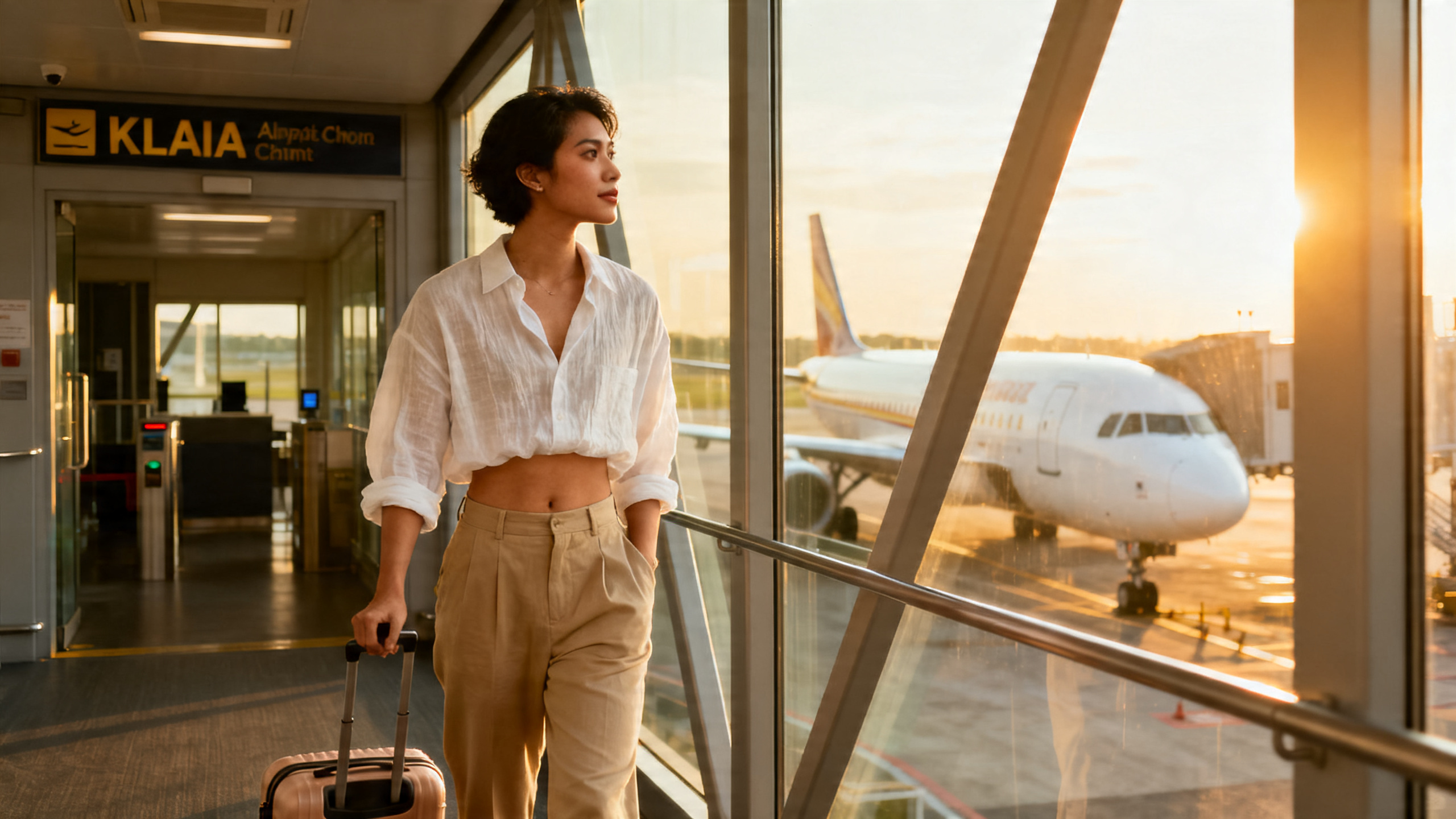
Here is the honest truth about flying out of Kuala Lumpur with a personal massager in your carry-on: in the vast majority of cases, nothing happens. KLIA security is primarily screening for weapons, explosives, prohibited liquids over 100ml, and undeclared cash over RM 10,000. A silicone wand with a small rechargeable battery does not look like any of those things on an x-ray scanner.
What the scanner operator sees is a cylindrical object with a battery. That is functionally identical to an electric toothbrush, a cordless hair trimmer, or a wireless speaker. Hundreds of these pass through KLIA every hour. Officers are trained to look for threats, not to judge personal items.
Malaysian law is nuanced here. The Penal Code Section 292 and the Customs (Prohibition of Imports) Order list “obscene articles” as prohibited — but the enforcement pattern for personal-use, non-explicit intimate devices carried by individual travelers has historically been extremely light, especially on the outbound side. Customs officers at KLIA are focused on arrivals (drugs, counterfeit goods, undeclared commercial shipments) far more than departures.
That said, they technically can confiscate. The safer framing is: the risk at KLIA outbound is low but not zero, and the smart traveler packs in a way that makes the device look as ordinary as possible.
Local context worth mentioning: Which terminal you use is determined by your airline, not by any difference in security standards.
Free: The Discreet Travel Checklist
Fly through KLIA without the awkward moment — what goes carry-on, the battery rules, destination tips. Screenshot-ready, straight to your inbox.
🔒 Prefer not to share your email? Join our anonymous Telegram channel → Zero personal info, leave anytime.
Lithium battery rules: why carry-on is mandatory
When traveling with intimate devices, this is the one rule that is genuinely non-negotiable, and it has nothing to do with what the device is. It has to do with the battery.
Since 2016, FAA, ICAO, and every major airline globally have required that lithium-ion batteries under 100 watt-hours (Wh) be carried in the cabin, not in checked luggage. The reason is thermal runaway: if a battery catches fire in the cargo hold, no one can put it out. In the cabin, flight attendants have extinguishers and battery containment bags.
Every consumer intimate device on the market uses a lithium-ion battery well under 100Wh. Most are in the 2-10Wh range — the same energy as a wireless earbud case. That means they are permitted in the cabin under those battery rules, and they must be in your carry-on or personal bag.
Putting one in your checked suitcase is the single most common mistake travelers make. If baggage screeners at KLIA, Changi, or Narita detect a lithium battery in checked bags, the bag gets pulled, you get paged at the gate, and the item may be confiscated or the flight delayed. That is when you get noticed — not from carrying the thing on, but from hiding it wrong.
For the official guidance, the FAA PackSafe lithium battery page is the clearest global reference, and the IATA passenger lithium battery PDF is what most international airlines use as their operating baseline.
How to pack when traveling with intimate devices: the smart setup
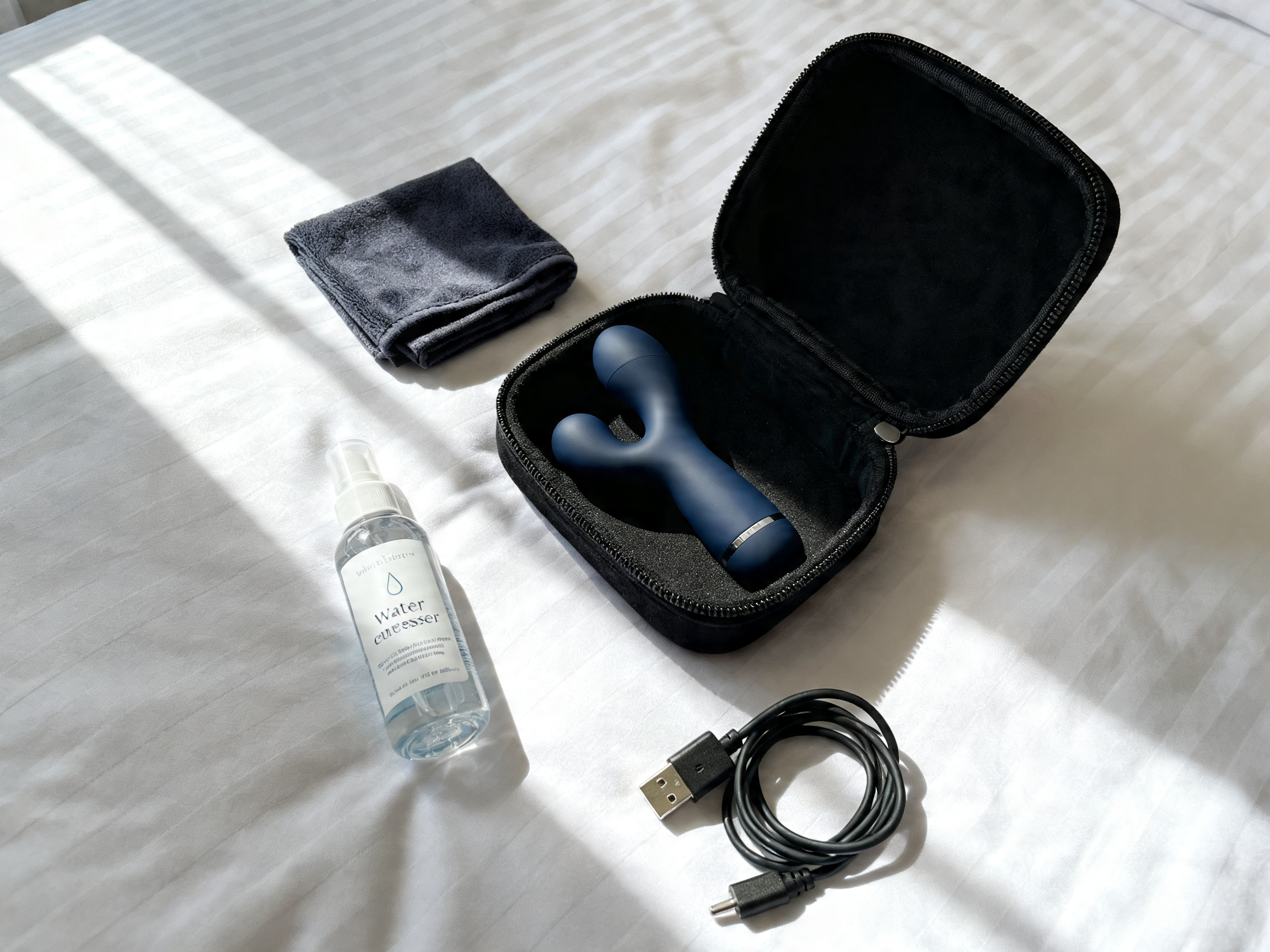
When traveling with intimate devices internationally, a few small packing choices make the difference between a two-second bag scan and an awkward secondary inspection.
- Clean it before you pack. Wash with warm water and a body-safe intimate cleanser, then dry fully. A clean device looks like any other gadget. (Our full cleaning routine is in our body-safe cleaning guide.)
- Use a soft zippered case, not plastic wrap or a grocery bag. The device should look like it belongs to you — something you’d pack a camera or small electronic in. Most premium brands ship with a fabric pouch; use it.
- Engage the travel lock if your device has one. Many modern devices from LELO, We-Vibe, and Womanizer have a travel-lock mode (usually a specific button-press combination). This prevents accidental activation from bag pressure. There is nothing more memorable for a screener than a buzzing carry-on.
- If the battery is removable, pull it out and tape the contacts. Most premium devices have sealed batteries, so this won’t apply — but for budget models with removable cells, loose batteries must have terminals covered with tape.
- Pack the charging cable with it. A USB-C cable next to the device makes it read immediately as “personal electronic” on the scanner.
- Put it in the main compartment, not hidden in socks. Hiding looks like hiding. A clean device in a clean pouch in a regular bag pocket is the least interesting thing to a screener.
- Don’t check the lubricant. Water-based lubricants fall under the 100ml liquid rule — decant into a travel bottle or buy at destination.
One more detail worth mentioning: charge the device before you fly, but not to 100%. Airline guidance on lithium batteries recommends arriving at the airport around 30-50% charged. This reduces thermal risk and, more practically, means the device is clearly “off” and drained enough not to trigger anything weird.
Destination-specific guide for Malaysian travelers
Where you’re going matters more than where you’re leaving from. Here’s a quick country-by-country overview of the destinations Malaysians fly to most often. Rules differ by country and they change — check the destination’s own customs guidance before you fly; we have not verified these individually:
- Singapore — Legally varies; check current customs guidance before you fly. We have not verified this ourselves.
- Thailand — Legally a grey area. Check current Thai customs guidance before you fly; we have not verified enforcement practice.
- Japan — Legally varies; check current customs guidance before you fly. We have not verified this ourselves.
- South Korea — Legally varies; check current customs guidance before you fly. We have not verified this ourselves.
- Indonesia — Technically prohibited under decency laws. Check current Indonesian customs guidance before you fly; we have not verified enforcement practice. Safest to leave it home.
- Vietnam — Legally a grey area. Check current Vietnamese customs guidance before you fly; we have not verified enforcement practice.
- Australia and New Zealand — Legally varies; check current customs guidance before you fly. We have not verified this ourselves.
- United Kingdom and EU — Legally varies; check current customs guidance before you fly. We have not verified this ourselves.
- United States — Legally varies; check current customs guidance before you fly. We have not verified this ourselves. We still recommend carry-on, for the lithium-battery rules above.
- United Arab Emirates (Dubai, Abu Dhabi) — Do not bring. Sex toys are explicitly prohibited and customs x-rays all arrivals. Confiscation is automatic; legal consequences are possible. This includes Dubai as a transit stop if you leave the airport.
- Saudi Arabia, Qatar, Maldives — Same as UAE. Do not bring.
- India — Legally grey, enforcement varies by airport. Mumbai and Delhi are stricter than Bangalore or Goa. Safer to leave home.
The pattern here is simple: Southeast Asia (excluding Malaysia’s own customs on inbound), East Asia, Oceania, and Western markets are all fine. Gulf states and a few conservative destinations are the absolute no-go list.
Traveling with intimate devices: what to do if stopped or searched
This happens to a small minority of travelers, but it’s worth knowing how to handle it before you’re standing there with a queue behind you.
Stay calm and be honest. If a screener asks what the item is, the correct answer is “a personal massager” — short, clinical, done. You do not owe a longer explanation. Screeners deal with everything from medical devices to prosthetics; they are trained to be professional and move on.
Do not lie about what it is. If you claim it’s a hair trimmer and the officer tests the button, you’ve created a much more awkward situation than the one you were trying to avoid.
Do not joke. Airport security is not the room for humor, even self-deprecating humor. A straight answer, a neutral face, and eye contact will end the conversation in under thirty seconds.
If you’re traveling with a partner, you can let them handle the answer if they’re more comfortable. The screener is not asking about a relationship — they’re asking about an object.
On the rare chance an officer wants to inspect it, they will typically swab it for explosive residue and hand it back. That is a normal airport screening procedure and does not indicate any further suspicion.
Product care on the road

Once you’ve landed, the logistics of discreet wellness on the road come down to storage and cleaning — and unfamiliar hotel bathrooms are the real challenge, not airport security.
Most hotel rooms have one reliable private space: the safe. Even a basic in-room safe is sufficient. Housekeeping does not open safes. For the shower routine, a quick rinse with warm water after use and a proper clean with intimate cleanser before repacking is enough. Let it air-dry on a clean towel for 20 minutes before returning to the pouch — sealing damp silicone breeds bacteria.
Avoid the hair-dryer trick. Heat damages silicone over time. Patience and a clean towel work better.
If you’re staying in a shared space — hostel, Airbnb with a host, or a friend’s place — keep the soft pouch inside a larger toiletry bag inside your main suitcase. Two layers of discretion is plenty.
One tip from our own travels: pack a small bottle of water-based intimate cleanser in your toiletry kit rather than relying on hotel hand soap. Hotel soap is almost always too harsh for silicone and can degrade the material surface after repeated use. A 50ml travel bottle is well under the carry-on liquid limit.
For a full deep-clean routine including material-by-material guidance (silicone, ABS plastic, steel), our complete cleaning guide covers everything you’d want to know, plus what to do if the device gets dropped in a pool or the ocean.
Buying at destination vs. bringing your own
For travelers going to restrictive countries, the question sometimes comes up: is it better to buy when you land?
The answer is usually no. If a country prohibits import, it also typically prohibits sale — so the “buy at destination” option doesn’t actually exist in the UAE, Saudi Arabia, or Maldives. In countries where it’s allowed (Japan, Singapore, Thailand, most of Europe), bringing your own is still better because you already know the product, the fit, and the clean protocol.
For a first-time purchase before a trip, our discreet shopping guide for Malaysia covers how to order privately and what to look for in a travel-friendly device (small, quiet, rechargeable, travel-lock).
Frequently asked questions
Can you bring sex toys on a plane in Malaysia?
Yes. There is no specific Malaysian aviation regulation prohibiting intimate devices in carry-on luggage. The relevant rule is the lithium battery rule (under 100Wh, carry-on only), which all consumer devices comply with. Customs can theoretically confiscate “obscene articles” but enforcement on outbound travelers with personal-use devices has historically been very light.
Will KLIA airport security flag my vibrator?
Very unlikely. Airport x-ray scanners identify shapes and densities, not specific items. A silicone wand reads as “cylindrical electronic device with small battery” — the same profile as an electric toothbrush. Scanners are looking for explosive materials, weapons, and undeclared liquids over 100ml. Screeners see thousands of similar objects daily.
What is the 100Wh lithium battery rule and does my sex toy meet it?
The 100 watt-hour limit is the FAA/ICAO standard for lithium-ion batteries in passenger aircraft cabins. Every consumer intimate device uses a battery in the 2-10Wh range, far below the limit. You don’t need to do anything special — just keep the device in your carry-on, never checked luggage.
Should I declare my intimate device at customs?
There isn’t a single answer. Check the current customs declaration requirements for each place you arrive in or transit through, and never make a false declaration — if a form or rule is unclear, ask customs or your airline before you travel. Declaration forms ask about commercial goods, prohibited items in bulk, undeclared cash, and agricultural products — not personal toiletries or electronics.
Can I take a sex toy to Dubai or on a Dubai layover?
No. The UAE explicitly prohibits intimate devices and x-rays all arriving baggage, including transit passengers who exit the airport. Even a connecting flight through Dubai can be risky if you leave the secure transit area. If you must transit through Dubai, stay airside and don’t claim your baggage.
How do I travel with a vibrator without it turning on in my bag?
Use the device’s travel lock feature if it has one (most premium devices do — check the manual for the button combination). If there’s no travel lock, make sure the device is fully powered off (hold the power button for 3-5 seconds until it vibrates once to confirm shutdown) and pack it in a soft case where nothing presses against the button. Some travelers also slip a small piece of paper between the button and the case lining.
What if my intimate device gets confiscated at an airport?
If it happens in Malaysia on arrival, the item is simply taken; there is no further legal consequence for a personal-use traveler with a single device. If it happens in a restrictive country like the UAE, consequences can be more serious — fines and in rare cases detainment. This is why the destination guide above is the most important section of this article. Never bring to Gulf states or Maldives.
Is it safer to pack my sex toy in checked luggage or carry-on?
Carry-on, always. Lithium-ion batteries are explicitly prohibited in checked luggage by every major airline. Beyond the battery rule, checked luggage goes through more aggressive screening and is handled by more people; carry-on goes through one scan and stays with you. Carry-on is both legally required and practically more discreet.
The bottom line
Traveling with intimate devices as a Malaysian is almost always simpler than the internet makes it sound. Pack it clean, pack it in a soft case, put it in your carry-on, engage the travel lock, and avoid the handful of destinations where it’s genuinely prohibited. Ninety-nine percent of Malaysian travelers never experience any issue.
The anxiety gap exists because no one talks about this openly — which is exactly why one Reddit post gets 121 upvotes. We hope this guide replaces the rumor with something you can actually use before your next flight.
If you’re still in the planning stage, our pillar guide on intimate wellness in Malaysia and our body-safe materials guide cover what to look for in a travel-friendly device before you even think about the airport.
Safe travels.
ABOUT THE AUTHOR
Mae Chen is the intimate wellness editor at Maison Velvetia. Mae is an editorial pen name for our research and writing team — a collective of sexual health writers, researchers, and wellness professionals. Our team has taken enough flights out of KLIA to know this topic deserves a proper local guide.
This guide reflects current published airline regulations (FAA/ICAO lithium battery rules) and widely reported traveler experience. It is not legal advice. Laws and enforcement change — verify for your specific destination before travel.
Partner store
Ready to shop?
We don’t sell products here — when you’re ready, our partner store carries body-safe picks with discreet delivery across Malaysia.
Browse Secret After Dark →🎁 Join our Telegram channel for a channel-only 10% code at Secret After Dark →
Find your starting point
A 30-second quiz for a gentle, personalised nudge
Start here · The path
Not sure what to read next? New here? Follow this 4-step path for a solid foundation 👇
Keep reading


8 Replies to “Traveling With Intimate Devices: Complete Malaysian Traveler’s Guide (2026)”
Intimate Wellness Malaysia: 7 Essential Tips for Beginners | Maison Velvetia
[…] a trip? Read our complete guide to traveling with intimate devices from Malaysia — KLIA airport reality, lithium battery rules, and a destination-specific no-go […]
Silicone Blend ≠ Body-Safe: 5 Materials to Avoid (2026)
[…] a trip? Read our complete guide to traveling with intimate devices from Malaysia — KLIA airport reality, lithium battery rules, and a destination-specific no-go […]
How to Buy Sex Toys in Malaysia Discreetly: Complete 2026 Guide
[…] a trip? Read our complete guide to traveling with intimate devices from Malaysia — KLIA airport reality, lithium battery rules, and a destination-specific no-go […]
How to Clean Sex Toys Properly: The Complete Care Guide 2026
[…] a trip? Read our complete guide to traveling with intimate devices from Malaysia — KLIA airport reality, lithium battery rules, and a destination-specific no-go […]
Gay Couple Intimacy Malaysia: Judgment-Free 2026 Guide
[…] lockable drawer or a discreet travel case, not in plain sight on the nightstand. If you travel, our travelling with intimate devices guide covers airport and hotel protocols that apply identically to same-sex […]
Male Masturbator Malaysia: A First-Timer's Complete Buying Guide (2026) - Maison Velvetia
[…] r/Malaysia threads we tracked over six months, gets held or returned. Travelling with one? Read our travelling with intimate devices Malaysia […]
KL-Penang-JB Domestic Travel Discreet Wellness Malaysia Guide: Hotels, Airbnb, Privacy & Maintenance (2026) - Maison Velvetia
[…] guide assumes you have already read our complete Malaysian traveler’s guide for international flights — that one covers KLIA, customs, lithium battery rules, and country-by-country legality. This […]
How to Use a Vibrator First Time: What Nobody Told Me (2026)
[…] Asia regularly, the in-person browsing + return-home transport is a viable path — see our travel guide for intimate devices in Malaysia for customs and packing […]