
⏱ 13 min read
📑 On this page (8)
- What Is Sensory Play, Actually?
- How Do You Bring It Up Without Making It Weird?
- What Are the Lowest-Barrier Sensory Play Ideas for Beginners?
- How Do You Keep Light Restraint Safe?
- What Is Aftercare, and Why Does It Matter?
- Can You Use Things You Already Have at Home?
- What Does the Sensory Play for Couples FAQ Cover?
- What’s the Takeaway on Sensory Play for Couples?
Quick Answer: Sensory play for couples starts simpler than you think. Start with zero-cost play: a comfortable blindfold and a clean feather can make familiar touch feel new. Before you begin, agree on boundaries and an unambiguous stop signal. Never bind joints or the neck, leave room for 1–2 fingers, monitor circulation continuously, and keep round-tip safety shears nearby. Guide anyone wearing a blindfold. End with aftercare—water, cuddles, and a two-minute debrief about what felt good or too much.
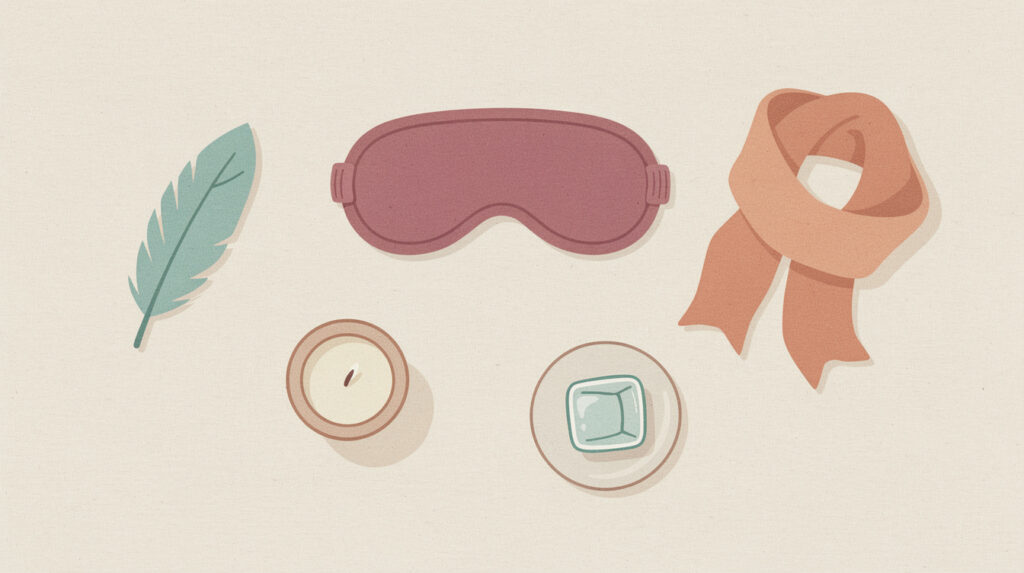
Sensory play doesn’t require a dramatic bedroom makeover or a new personality. At its simplest, one partner closes their eyes while the other traces a feather along an arm. The interest comes from not knowing exactly what touch is next—not from making the experience extreme.
< This guide keeps things beginner-level and safety-first — the wider world of couples play is covered in our other guides. For the bigger relationship picture, read our guide to keeping a relationship fresh; for a wider look at shared intimate accessories, see our couples’ accessories overview. Deeper kink practices belong with specialist communities that teach their specific risks and skills.A quick note: This is general educational information, not medical or legal advice. If a product ever causes pain, burning, bleeding, swelling, or lasting irritation, stop using it and speak to a qualified healthcare professional.
What Is Sensory Play, Actually?
Sensory play means changing what one or more senses receive so the others get more attention. A blindfold reduces visual information, which can make a whisper, a cool touch, or the texture of silk feel less predictable. Soft music can create a private-feeling bubble; slowing down a familiar massage can make pressure and temperature easier to notice. Think of it as turning down one instrument so you can hear the rest of the song.
Nothing has to be intense, and nothing has to lead anywhere. You might spend five minutes comparing a feather, a fingertip, and a folded piece of silk on the forearm, then stop. One person can stay completely unrestrained. You can take turns, keep the lights on, or skip the blindfold and simply focus on texture. The point is shared curiosity, not completing a prescribed routine.
That flexible definition matters for beginners. Some people find anticipation exciting; others feel calmer when each touch is announced first. Some love feather-light contact, while ticklish people prefer a warm palm or soft brush. None of those responses is more sophisticated. Sensory exploration works when both people can notice their reactions and say, “More like that,” “Lighter,” or “I’m done.”
It also sits inside ordinary sexual wellbeing, which includes communication, identity, relationships, and physical and emotional health—not only sexual activity. The American Psychological Association’s sexuality resources offer a broader, non-judgmental starting point for understanding that context.
Get your free Body-Safe Starter Kit
Plus weekly, judgment-free intimate wellness guides — straight to your inbox. No spam, unsubscribe anytime.
🔒 Prefer not to share your email? Join our anonymous Telegram channel → Zero personal info, leave anytime.
How Do You Bring It Up Without Making It Weird?
Bring it up away from the bedroom, when neither of you is already expecting intimacy. That removes the pressure to decide immediately. Keep the invitation specific and small: “I read about trying a blindfold while keeping both hands free. Would you be curious to try it for five minutes sometime?” Specific sounds less alarming than announcing a mysterious “new thing,” and a short trial feels easy to decline.
Then discuss boundaries in plain language: what touch is welcome, what is off-limits, whether a blindfold feels comfortable, and whether both hands should remain free. Agree that “stop” always means stop—immediately, without persuasion or a demand for an explanation. Anyone can change their mind at any time, including after saying yes and after play has started. Consent needs to be freely given, specific, informed, enthusiastic, and reversible; the Planned Parenthood guide to sexual consent explains those principles clearly.
If someone will be blindfolded or might not be able to speak clearly, agree on a backup non-verbal signal, such as three hand-squeezes. It is a backup, never a replacement for spoken communication. Beginners should avoid any position that restricts speech or breathing entirely. Silence, freezing, or a lack of resistance is not consent; pause and check in.
Try: “I’m curious about a very gentle version—blindfold, feather, hands free. Would that sound fun, neutral, or like a no? Any answer is okay.”
“Not interested” is a complete answer. Curiosity is never an obligation, and affection isn’t a bargaining chip. Swap the idea for a massage, cuddling, or another form of intimacy you both want. If talking about preferences tends to feel loaded, our guide to talking about sex gives you a calmer conversation framework.
What Are the Lowest-Barrier Sensory Play Ideas for Beginners?
Start with one variable, not a tray of props. Clear the floor and bedside area, silence notifications, and decide who will receive first. Keep the first round to five or ten minutes, with both hands free. Every minute or two, ask, “Same, softer, or stop?” That turns feedback into part of the play instead of an interruption.
- Blindfold: Use a comfortable eye mask or a scarf folded wide enough not to press on the eyes. Let your partner try it for 30 seconds before touch begins. They can remain lying down or seated. If they move, guide them; never let a blindfolded person navigate a cluttered room alone.
- Feather or soft brush: Use something clean, shed-free, and reserved for this partner. Keep it away from eyes and broken skin. Feathers are porous and — porous natural feathers especially — generally can’t be reliably disinfected, so keep them away from bodily fluids and don’t share them between partners.
- Silk: Glide clean silk over the forearm, shoulder, or calf, or use it to reveal one patch of skin at a time. Texture is the job here—not restraint. If you like creating a mood through clothing, our lingerie guide covers fit and fabric without turning it into a performance.
- Temperature: Wrap ice in a thin cloth or use only brief, moving touches. Avoid mucous membranes and broken skin. Anyone with circulation or sensation issues should skip temperature play. For warm massage oil, test the temperature on your own inner wrist first and patch-test if your partner has sensitive skin or allergies. Oil-based products damage latex condoms, so keep them apart. Use nothing hot and no open flames.
In Malaysia’s tropical heat, “warm” oil may already be warmer than expected after storage. Keep it away from sunny windows and hot cars, and test it every time. A cool room can be comfortable, but shivering isn’t the goal. The best beginner sequence is usually simple: blindfold, one texture, frequent check-ins, then switch roles only if both people want to.
How Do You Keep Light Restraint Safe?
Light restraint changes the safety calculation because the restrained partner cannot move away as easily. For a first attempt, keep their hands in front of the body and use purpose-made soft cuffs with a Velcro or other quick-release design. Look for an actual quick-release mechanism rather than assuming every product sold as a soft cuff will open quickly under stress.
- Never bind the neck. Do not place a scarf, cord, collar-like tie, or pressure around it. Avoid any position or material that affects breathing.
- Keep bindings off joints. Leave room for 1–2 fingers—but treat that check only as the starting point. Throughout play, monitor for numbness, tingling, coldness, or colour change. Release the restraint completely at the first sign of any of them.
- Avoid slip-knots. Knots that tighten under tension can become dangerously snug. Household silk scarves and neckties can cinch down and jam into tight knots, so they are poor restraint tools even when they feel soft.
- Prepare the safe exit first. Keep round-tip trauma shears, available from a pharmacy, within reach before anything goes on. Never slide pointed scissors between skin and a binding; a startled movement can turn them into a cutting hazard.
- Stay in the room. Never leave a restrained person alone—not even to answer the door or retrieve something nearby. Release them fully first.
Continue verbal check-ins, and take cold hands, changed colour, quietness, or a strained position seriously. A person who says “stop,” uses the backup signal, freezes, or looks distressed is released immediately. Restore their vision, help them into a comfortable position, and ask what they need before discussing what happened.
Don’t combine a first blindfold with a first restraint just because each sounds mild on its own. Learn how your partner responds to one new element at a time. Good light bondage safety for beginners is deliberately unglamorous: easy release, clear speech, observable hands, constant attention, and no improvising with household ties.
What Is Aftercare, and Why Does It Matter?
Aftercare is the deliberate transition from heightened attention back to ordinary connection. It is part of the play, not an optional extra. Remove every blindfold and restraint completely, offer water, and ask whether your partner wants cuddles, space, a blanket, or a normal conversation. Don’t assume everyone wants touch immediately; asking is warmer than guessing.
Once both people feel settled, have a two-minute debrief:
- What felt good?
- What felt like too much or became uncomfortable?
- What should we repeat, change, or leave out next time?
This isn’t a performance review. “The feather made me laugh, but your palm felt lovely” is useful information, not criticism. So is “I liked the blindfold for one minute, then I wanted to see you.” Thanking each other for honest feedback makes the next conversation easier.
Do a physical check too. Look for marks or lingering colour change and ask about numbness, tingling, or pain. Persistent symptoms, breathing discomfort, or an injury need medical attention. Emotionally, either person may feel unexpectedly tender, silly, energised, or quiet. Give that response room without inventing a deeper meaning. Water, cuddles if wanted, and a brief truthful debrief close the experience together with the same care that opened it.
Can You Use Things You Already Have at Home?
Yes—for texture, sound, and atmosphere. A clean eye mask, a wide folded scarf used only as a loose blindfold, a soft makeup brush, fresh bedsheets, a playlist, or an air-conditioned room can be enough. Check brushes for loose bristles, wash reusable fabric, and keep anything porous away from bodily fluids. Household objects are not automatically body-safe because they feel soft.
Draw the line at improvised restraint. Don’t use silk scarves, neckties, thin cord, electrical cable, plastic wrap, or anything that tightens, jams, cuts into skin, or cannot be released instantly. Silk can trail over skin beautifully; it should not hold wrists together. If you later buy soft cuffs, choose a quick-release design and practise opening it before use.
Privacy matters in a KL condo or shared family housing. Choose a time when you won’t be interrupted, lock the door if appropriate, put phones on silent, and keep music low enough to hear your partner clearly. Never use noise or headphones in a way that hides a stop signal. If the delivery label worries you, Shopee and Lazada sellers vary, so confirm plain, discreet packaging in writing rather than assuming.
Tropical storage needs a little common sense. Keep massage oil sealed, upright, and away from direct sun, steamy bathrooms, and parked cars; discard it if the smell, colour, or texture changes. Store clean blindfolds and cuffs completely dry to discourage mildew. A small, washable pouch keeps everything discreet without turning safety supplies—especially the round-tip trauma shears—into something you cannot reach quickly.
What Does the Sensory Play for Couples FAQ Cover?
Will my partner think I’m weird for suggesting this?
Probably not if you offer one gentle, specific idea and make “no” easy. Try: “Would you be curious about a five-minute blindfold and feather experiment?” Their answer is information, not a verdict on you or your relationship.
Can I just tie a silk scarf around their wrists?
No. Silk scarves and ties can tighten and jam, making emergency release difficult. Use purpose-made soft cuffs with a tested quick-release design, keep them off joints, and monitor circulation continuously; softness alone does not make a restraint safe.
What if someone wants to stop halfway?
Stop immediately, remove any restraint or blindfold, and help them get comfortable. Anyone can change their mind at any time and owes no justification. Offer water, space or closeness, then discuss it only if and when they want to.
How do you use a blindfold in bed safely?
Clear the floor and bedside area first, check that the blindfold does not press on the eyes or obstruct breathing, keep speech clear, and guide the blindfolded partner whenever they move. Remove it immediately if they feel anxious.
Can you put ice directly on skin?
Use ice only through a thin cloth, keep it moving, and check the skin after a few seconds—never held in one spot. Avoid broken skin and mucous membranes. Stop for pain, pallor or numbness, and skip temperature play entirely with circulation or sensation issues.
Can feathers and soft brushes be shared?
Don’t share porous feathers between partners, and keep them away from bodily fluids because they — porous natural feathers especially — generally can’t be reliably disinfected. Choose a clean, shed-free feather or brush, avoid eyes and broken skin, and reserve porous items for one partner.
Does sensory play have to lead to sex?
No. It can be a five-minute touch experiment, a slow massage, or a way to feel present together. Decide the scope beforehand, and remember that agreeing to one activity never implies agreement to anything that might follow.
What should beginners buy first in Malaysia?
You may need nothing. If you want dedicated props, prioritise a comfortable blindfold, quick-release soft cuffs, and pharmacy round-tip trauma shears. For online orders, check materials, opening design, seller reviews, and discreet-packaging details before paying.
What’s the Takeaway on Sensory Play for Couples?
The best first experience is often the least complicated: one blindfold, one clean texture, free hands, and five unhurried minutes. Agree in advance on what is welcome, what is off-limits, and how either person will stop. Keep speech and breathing unrestricted; treat a non-verbal cue only as backup; and accept “not interested” without trying to negotiate it into a yes.
If light restraint enters the plan, upgrade the preparation before you upgrade the intensity. Use quick-release soft cuffs, never bind the neck or joints, monitor circulation beyond the initial 1–2-finger check, keep round-tip trauma shears within reach, and stay in the room. A blindfolded partner needs a clear floor and guidance whenever they move. Temperature needs brief, mild contact—not heat, flames, or endurance.
Most of all, let sensory play for couples be a conversation rather than a test of daring. Follow curiosity only while it feels mutual, release first and talk later if something changes, and finish with water, wanted cuddles, and a two-minute debrief. Safety doesn’t drain the playfulness from the moment; it gives both people enough trust to notice what actually feels good.
A good first session can end with both of you saying, “That was enough for tonight.” Success isn’t intensity; it is two people feeling heard before, during, and after. Keep the parts you enjoyed, retire the parts you didn’t, and let future experiments earn their way in slowly.
This article offers general education for consenting adults exploring gentle sensory play. It is not medical advice or specialist restraint training. Stop immediately for pain, numbness, tingling, coldness, colour change, breathing discomfort, panic, or injury, and seek medical care when symptoms persist or urgent help is needed.
Looking for beginner-friendly props with discreet delivery?
After you’ve agreed on boundaries, a comfortable blindfold and quick-release soft cuffs are easier to control than household ties. Our partner store Secret After Dark offers intimate accessories with discreet delivery across Malaysia. Learn the safe use first; buying is optional.
Want more guides like this?
Join our newsletter for evidence-based, Malaysia-specific intimate wellness guides—zero judgment, no spam. Subscribe free here →
Start here · The path
Not sure what to read next? New here? Follow this 4-step path for a solid foundation 👇
Partner store
Ready to shop?
We don’t sell products here — when you’re ready, our partner store carries body-safe picks with discreet delivery across Malaysia.
Browse Secret After Dark →Keep reading
Best App-Controlled Vibrators Malaysia 2026: What to Check Before You Pair

Sex Toys for Couples in Malaysia: A Beginner’s Guide to Shared Intimacy (2026)

How to Talk About Sex With Your Partner: Communication Guide for Malaysian Couples (2026)
